


Peek at the ingredient list of a typical dog multivitamin and you might think it came from a chemistry lab. Many synthetic canine supplements contain a laundry list of chemical compounds – things like “pyridoxine hydrochloride” or “menadione sodium bisulfite” – which are essentially factory-made versions of vitamins. In contrast, natural dog supplements are derived from real foods and whole ingredients like bone broth, organ meats, fruits, and herbs. It’s no wonder that more dog owners are turning to whole-food organ supplements for dogs as a natural alternative to synthetic multivitamins. Whole food nutrition provides a richness and biological synergy that lab-made isolates simply can’t match. But why, exactly, does nature trump laboratory when it comes to nourishing your dog? Let’s break down the differences and discover why whole food nutrition wins.
Understanding the Difference: Natural vs. Synthetic Supplements
Not all dog supplements are created equal. “Natural” supplements and synthetic supplements differ in their sources and how they interact with your dog’s body. Here’s a quick overview:
Natural Dog Supplements
-
Source: Derived from whole food ingredients – for example, organ meats, bone broth, fish oil, kelp, turmeric, and other herbs or foods. These supplements deliver nutrients in the same form they appear in nature.
-
Bioavailability: Easier for a dog’s body to recognize and absorb. Whole-food supplements come with naturally occurring cofactors (enzymes, peptides, minerals) that help your dog actually utilize the vitamins and minerals. Think of it as giving the body a complete package, not just an isolated piece.
-
Additional Benefits: Along with the targeted nutrient, your dog also gets a spectrum of other beneficial compounds. For example, a natural liver supplement isn’t just vitamin A – it also provides protein, B vitamins, iron, copper, and more, all of which work together to support holistic dog nutrition.
-
Palatability: Often very tasty to dogs because they are real food. A sprinkle of beef bone broth or organ powder on dinner is like a delicious meal topper, making even picky eaters excited for their food.
Synthetic Dog Supplements
-
Source: Manufactured in laboratories to create isolated nutrients. Synthetic vitamins are typically made by chemical processes (for instance, synthetic vitamin B1 is produced from coal tar, ammonia, and acids). These nutrients are engineered to mimic the molecular structure of natural vitamins – but they’re not coming from real food.
-
Bioavailability: Often harder for the body to absorb. Without the natural cofactors present, synthetic nutrients can be less efficient. Your dog’s digestive system may not “recognize” a synthetic nutrient in the same way, so a large portion can pass through unused or get excreted. (If you’ve ever noticed neon yellow urine after taking a multivitamin – the same principle applies to pets!)
-
Limitations: Focused on single nutrients, ignoring the bigger nutritional picture. Synthetic supplements typically deliver an isolated high dose of one vitamin or mineral. They lack the supporting network of ancillary nutrients and can even create imbalances. For example, flooding the body with one artificial vitamin can sometimes deplete others. They also often require flavor enhancers or additives to be palatable for dogs.
Why Whole Food Dog Supplements Outshine Synthetics
Whole food nutrition isn’t just a trendy term – it’s how dogs evolved to get their nutrients. Here’s why natural, food-based supplements have the upper paw over synthetic ones:
-
Better Absorption and Bioavailability: Nutrients from whole food dog supplements are more bioavailable, meaning your dog’s body can absorb and utilize them more effectively. In nature, vitamins come packaged with all their necessary cofactors. For instance, liver provides vitamin A alongside vitamin D, K2, zinc, and healthy fats – a combination that helps the body absorb and use vitamin A safely. Laboratory-made vitamins, on the other hand, often lack these helpers. In fact, research has shown that certain nutrients are absorbed in far greater amounts from whole foods than from isolated supplements. (One study found that a key antioxidant in broccoli was absorbed up to five times more when dogs ate actual broccoli compared to a supplement pill!) The bottom line: real food works with your dog’s biology, while synthetics can remain strangers to it.
-
Complete Nutritional Profiles (Synergy): Whole foods provide a tapestry of nutrients that work in concert. This nutritional synergy means, for example, a single natural supplement like beef kidney isn’t just one thing – it delivers B vitamins, iron, selenium, and specific enzymes all at once. These elements enhance each other’s effectiveness. Synthetic supplements by contrast are a one-note tune, focusing narrowly on individual vitamins. The old saying, “the whole is greater than the sum of its parts,” rings true here. A dog consuming a variety of organ-based or whole-food supplements is getting a chorus of nutrients that a lab-made multivitamin pill just can’t reproduce.
-
Fewer Side Effects and Safer Dosing: Synthetic vitamins are concentrated chemicals. In excess, they can build up and potentially cause problems – especially the fat-soluble ones (A, D, E, K) which aren’t easily excreted. Nature, however, has checks and balances. When nutrients are in food form, they’re usually present in safe ratios and accompanied by other elements that moderate their effects. It’s practically impossible for a dog to “overdose” on vitamins by eating whole foods; they’d fill up long before reaching toxic levels. In contrast, there have been unfortunate cases where formulation errors in commercial pet foods led to dangerous levels of synthetic vitamins. (For example, in 2018 several dog foods were recalled due to excessive vitamin D – some batches contained over 70 times the intended vitamin D level, causing toxicity in dogs.) With whole food supplements, the risk of such extreme imbalance is dramatically lower.
-
No Unwanted Additives: A lot of synthetic supplement products (think mass-market doggy multivitamin chews or tablets) contain artificial flavorings, colorings, preservatives, or fillers to make the product shelf-stable and appealing to pets and humans alike. Natural, whole-food-based supplements skip the junk. They don’t need neon coloring or “bacon flavor” chemicals to entice your dog – the rich aroma of real beef liver or bone broth does that naturally! Fewer artificial additives mean less chance of stomach upset, allergies, or long-term exposure to questionable ingredients.
-
Palatability and Enjoyment: Ever tried convincing a dog to swallow a big synthetic pill? Not fun for either of you. Many dogs also wise up to those sneaky “vitamin treats” if they have a medicinal taste. But natural supplements often double as high-value food toppers or treats. Sprinkle a whole-food bone broth powder or organ meat mix onto your dog’s kibble and watch them do a happy dance at mealtime. (It’s nutrition delivered in the tastiest way possible.) This means less hassle for you and more joy for your dog – a win-win.
-
Ancestral Alignment: Perhaps most importantly, whole food supplements align with how dogs are meant to eat. Our dogs’ wild ancestors weren’t crunching “vitamin tablets” in the forest – they were chewing real bones and innards. A wolf or wild dog that catches prey eats the liver, heart, kidneys, bones, and marrow, gaining a naturally balanced dose of nutrients. By choosing natural supplements made from these same parts, we’re respecting our dogs’ biological heritage (often called an ancestral or species-appropriate diet). Modern kibble alone, even if “complete and balanced,” is a far cry from that ancestral diet. Whole-food supplements help bridge the gap by adding back what processed foods lack, in a form the canine body inherently understands.
Whole-Food Organ Supplements: Nature’s Multivitamin for Dogs
If whole foods are so great, you might wonder: what’s the canine equivalent of a “one-a-day” multivitamin in nature? Look no further than organ meats and nutrient-rich broths. A blend of organ meats is essentially a natural multivitamin for dogs, packed with bioavailable vitamins and minerals from nose to tail. Here are a few all-star examples:
-
Liver – the Vitamin Powerhouse: Often called “nature’s multivitamin,” beef liver is one of the most nutrient-dense foods on the planet. It’s loaded with vitamin A (for vision and immune support), multiple B vitamins (for energy and metabolism, including B12 and folate), iron (for healthy blood), zinc, and copper, among others. In synthetic form, these might be separate pills or powders – but with liver they come perfectly packaged together. Dogs instinctively love liver’s taste (ask any trainer who uses freeze-dried liver treats). It’s no coincidence that in the wild, the liver is devoured first.
-
Other Organs (Heart, Kidney, Spleen, etc.): Each organ offers unique nutritional benefits. For instance, heart meat is an excellent source of natural taurine and coenzyme Q10, supporting cardiovascular health and stamina. Kidney is rich in selenium and vitamin B6. Spleen provides a natural source of iron and vitamin C. By rotating or combining a variety of organs, you give your dog a broad spectrum of nutrients that target different aspects of health – from joint support to immune function – all from real food. This is truly holistic dog supplementation in action.
-
Bone Broth and Collagen: A discussion of whole-food supplements wouldn’t be complete without bone broth – essentially the liquid gold of ancestral nutrition. Slow-simmered bone broth is rich in collagen, gelatin, glucosamine, chondroitin, and minerals like calcium and magnesium. These compounds support healthy joints, skin, and digestion in ways that synthetic joint pills try to imitate. Many commercial joint supplements use synthetic glucosamine (often sourced from shellfish) and chondroitin in isolation; by contrast, a grass-fed bone broth gives these same joint-protective nutrients in a natural matrix that the body readily uses. Plus, bone broth’s gut-soothing gelatin can help digestion and improve nutrient absorption overall. It’s a nourishing tonic that hydrates and heals – something a synthetic tablet can’t do.
The beauty of whole-food organ and broth supplements is that they address multiple needs at once. For example, adding a scoop of beef organ and bone broth powder to your dog’s meal can support joint health (from collagen), boost energy and blood health (from iron and B12 in organ meats), enhance skin and coat (from vitamin A and zinc), and entice a picky eater – all in one go. It’s hard to find a synthetic multivitamin that can claim the same broad benefits without pages of additives.
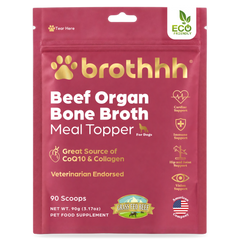
Brothhh’s own Beef Organ & Bone Broth Complex was formulated with exactly this philosophy in mind. It combines human-grade, grass-fed beef organs (liver, heart, kidney, pancreas, spleen) with nutritious bone broth in a convenient powder. Essentially, it’s a nose-to-tail supplement that mirrors what a wild canine would get from consuming whole prey – providing natural vitamins, minerals, amino acids, and joint-supporting compounds in one scoop. We created it so modern dogs can easily benefit from ancestral superfoods, without any synthetic vitamins or mystery “proprietary blends.” Just real food in a bowl, as nature intended.

Choosing Natural: Tips for Embracing Whole-Food Nutrition
Making the switch to natural supplements for your dog is one of the best investments you can make in their long-term health. Here are a few tips to do it right:
-
Read Ingredient Labels Carefully: Don’t be fooled by front-of-package marketing. Flip the container around and read the fine print. A truly natural supplement will list recognizable foods (e.g., “beef liver, spinach, blueberries”) rather than a litany of chemical names. If a product claims to be natural but the ingredient list hides behind terms like “vitamin blend” or shows things like “ascorbic acid, dl-alpha tocopherol, zinc sulfate,” it’s a sign that synthetic additives are inside. Transparency is key – you deserve to know exactly what you’re feeding your dog.
-
Choose Reputable Sources: Quality matters since you’re dealing with real food products. Opt for brands that prioritize sourcing and safety testing. For example, at Brothhh we use grass-fed, pasture-raised beef organs and slow-cooked bone broth, with rigorous quality checks for purity. High-quality natural supplements may cost a bit more than cheap synthetic pills, but you’re paying for real nutrition (not fillers or cheap vitamins). As the saying goes, you get what you pay for – and when it comes to your beloved dog’s health, cutting corners is not an option.
-
Introduce Whole-Food Supplements Gradually: Most dogs absolutely love the taste of organ meats and broth. But anytime you add something new to the diet, do it gradually. Start with a small amount sprinkled on their food to ensure it agrees with their tummy. Because these supplements are food-based, they’re generally gentle on digestion. Still, every dog is unique. Over a few days, work up to the recommended serving. Pretty soon, your dog will likely be licking the bowl clean and begging for more!
-
Consult with Your Vet if Needed: If your dog has specific medical conditions or is on medications, it’s wise to consult your veterinarian when adding any new supplement, even natural ones. Holistic and integrative vets tend to be very supportive of whole-food nutrition and can help tailor an approach for your dog’s individual needs. (They can also confirm any specific deficiencies or issues that a targeted supplement might help.) A vet’s guidance can provide peace of mind that you’re doing the best for your dog.
-
Observe the Results: One of the joys of switching to whole-food supplements is seeing the real improvements in your dog’s vitality. Over a few weeks, you might notice a shinier coat, higher energy, better appetite, or improvements in mobility and digestion. Because these nutrients are genuinely nourishing your dog’s body (not just passing through), the benefits tend to be visible. Take note of these positive changes – they’re the ultimate proof that whole food nutrition is winning.
The Bottom Line: Real Food for a Healthier Dog
At the end of the day, dogs thrive on real, natural nourishment. While synthetic supplements had the right intention – preventing deficiencies and boosting health – they are a shortcut that misses the complexity and wisdom of nature. Natural canine nutrition embraces the fact that mother nature already engineered the perfect multivitamins in the form of organs, meaty bones, and wholesome plants. By choosing whole-food supplements, you’re not only sidestepping the risks and shortcomings of synthetics, but you’re also honoring what your dog’s body truly needs.
We’re transparently direct about this: we love dogs more than humans (we said it!). That’s why at Brothhh, our entire philosophy is built around real-food, ancestral nutrition. We’re passionately devoted to giving dogs the happiest, healthiest life possible by filling their bowls with the kind of nourishment their wild ancestors would recognize. No fluff, no artificial junk – just proven ingredients and plenty of love. (You can read more about our mission and standards on our About Us page.)
In the natural vs. synthetic debate, the verdict is clear. Whole food nutrition wins – paws down. By incorporating whole-food organ supplements, bone broth, and other natural boosters into your dog’s diet, you’re investing in their long-term wellness in the most wholesome way. Education comes first: now you know exactly why those real ingredients matter. And when you’re ready to put education into action, there are convenient options (like the carefully crafted formulas on our Science page) to make it easy and mess-free. Your dog gives you 100% unconditional love; giving them 100% real nutrition is a wonderful way to love them back. After all, nothing beats nature’s recipe for a vibrant, tail-wagging life!



Leave a comment
This site is protected by hCaptcha and the hCaptcha Privacy Policy and Terms of Service apply.