


Bone broth has become a popular addition to canine diets, prized for its potential to support joint health and digestion. Many devoted pet owners are crafting homemade bone broth for dogs in their own kitchens, while others opt for convenient, pre-made broths. If you’re seeking consistent joint benefits for your dog, it’s important to examine the homemade vs. store-bought bone broth comparison for dogs seeking consistent joint benefits from all angles. Below, we’ll define what bone broth offers nutritionally and break down the pros, cons, and best practices of each option.
What Is Bone Broth for Dogs (and Why Use It)?
Bone broth is a nutrient-rich stock made by simmering animal bones and connective tissues in water for hours (often 12+ hours). This slow cooking extracts valuable nutrients: it’s rich in collagen (which turns into gelatin), amino acids like glycine and glutamine, and minerals such as calcium, phosphorus, and magnesium. The result is a protein-packed, flavorful liquid that gels when cooled. In simple terms, bone broth is a concentrated source of natural compounds that can benefit your dog’s health:
-
Joint Support: Long simmering releases collagen, glucosamine, chondroitin, and hyaluronic acid from cartilage and bones. These components are the building blocks for healthy joint cartilage. Regular broth can act like a natural joint supplement, helping cushion joints and maintain mobility in active or senior dogs.
-
Digestive Health: Gelatin (cooked collagen) in bone broth helps protect and seal the gut lining. Glycine, an amino acid abundant in broth, has anti-inflammatory effects and aids digestion. This makes broth soothing for dogs with sensitive stomachs – it’s gentle enough for dogs recovering from illness and can help firm up loose stools or hydrate a dog that won’t drink much water.
-
Hydration and Nutrition: Bone broth is mostly water, so it boosts hydration while also delivering proteins and minerals. It’s an excellent way to entice picky eaters or dogs that need more fluids. Think of it as “chicken soup” for dogs – a nourishing, tasty liquid that provides comfort and nutrients.
With benefits like these, it’s no wonder the American Kennel Club calls bone broth a “superfood with many benefits” for dogs. In fact, the health benefits of bone broth have made it a staple for many dog owners looking to give their pet an extra boost. The key question is: should you make it yourself or buy a ready-made version?
Homemade vs. Store-Bought: Key Factors to Consider

Nutrition and Consistency
Both homemade and store-bought bone broths can offer great nutrition, but consistency differs. A well-made homemade broth can be incredibly nutrient-dense – you can load it with cartilage-rich bones (for extra collagen) and even add dog-safe veggies for vitamins. However, each batch of DIY broth may vary in strength; one batch might gel nicely (a sign of high gelatin content) while another is thinner. In contrast, store-bought bone broth for dogs (especially products formulated for pets) tends to have a consistent recipe. Quality pet brands simmer bones to a standard formula, so you get reliable levels of protein and collagen in every serving. That consistency means you know what you’re getting each time, which can be important if your dog relies on broth for joint support. On the flip side, some mass-produced broths (particularly those not made specifically for dogs) might be more diluted or vary in quality, so choosing a reputable product is crucial.
Ingredient Control
When you make bone broth at home, you have complete control over the ingredients. You decide the type and source of bones (e.g. grass-fed beef bones or free-range chicken carcasses), and you can ensure nothing harmful goes into the pot. Homemade broth lets you avoid any additives, preservatives, or excess salt. This is great if your dog has sensitivities or if you’re particular about using organic ingredients. In comparison, store-bought options require trust in the manufacturer. High-quality dog-specific broths use simple, dog-safe ingredients, but you must read labels carefully. Many human broths contain onions, garlic, high sodium, or artificial flavorings that dogs don’t need (or are toxic to them). Always choose a broth that’s clearly made for pets or one that lists only dog-friendly ingredients. In short, homemade gives you peace of mind on what’s inside, whereas with store-bought you’ll need to rely on the brand’s transparency. (Pro tip: ensure any product is labeled human-grade and free of onion/garlic. If in doubt, ask the company about their ingredient sourcing.)
Time and Convenience
One of the biggest differences between DIY and store-bought is the time investment. Making bone broth for dogs at home is simple but not quick – you’ll be simmering bones for 12 to 24 hours, plus prep and cleanup. You also have to strain the broth, let it cool, and portion or freeze it for storage. It’s a labor of love that requires planning (and a house filled with simmering aromas!). Store-bought bone broth wins hands-down on convenience. With a ready-made product, you can have broth available in seconds – just open a carton or mix a powder. There’s no need to babysit a stove or handle raw bones. This convenience is especially appealing for busy dog owners or those who aren’t comfortable in the kitchen. Your dog won’t know whether you spent all day cooking or simply opened a package; they only care that it’s delicious and nourishing. So if you value your time, the ready-made route shines.
Safety and Quality Control
Safety is paramount when it comes to any dog food or supplement. Homemade broth is very safe as long as you follow a few guidelines: never include toxic ingredients (no onions, garlic, excessive salt or spices) and always strain the final broth to remove any bone fragments. It’s wise to skim off excess fat once the broth cools, especially if your dog is sensitive to rich foods – too much fat can upset some dogs’ stomachs. You’ll also want to store homemade broth properly (refrigerate and use within a few days, or freeze portions) to prevent spoilage. With store-bought bone broth, safety depends on the product. The advantage is that reputable pet brands will test their broths for pathogens and ensure a long shelf life through proper packaging (e.g. vacuum-sealed cartons or dehydrated powder). However, you still must be vigilant: some grocery store broths marketed for humans contain ingredients like onion powder or lots of sodium that are unsafe for dogs. Always check that any broth is explicitly safe for canine consumption. In general, it’s best to buy from brands that make bone broth especially for dogs – these will omit dangerous ingredients and often use quality sources. In terms of quality control, store-bought gives you the benefit of professional production (with likely consistent nutrient content and safety checks), whereas homemade quality is up to your own diligence and cooking skills.
Cost
Cost can be a deciding factor for many. Homemade bone broth is often the more economical choice. Bones (like beef marrow bones or chicken frames) are relatively cheap, and you’re essentially making a large batch of broth with minimal other ingredients (just water, and maybe a splash of apple cider vinegar and some dog-safe veggies). For a few dollars in ingredients and some electricity or gas for simmering, you can yield multiple quarts of broth. Store-bought bone broth, especially high-quality pet-specific products, tends to be pricier per serving. You’re paying for the convenience and the packaging. A typical liquid bone broth for dogs might cost several dollars per carton, which could last only a few days for a big dog. Dehydrated bone broth powders or concentrates (which many brands offer) might be more cost-effective in the long run, but still generally cost more than homemade when comparing equal volumes. That said, there’s also the “time is money” factor – the hours you spend making broth could be spent elsewhere, so some owners don’t mind paying extra for a ready solution. If budget is a concern and you have the time, DIY is the winner. If convenience is worth the price, store-bought is justified. In any case, both options can be less expensive and more nutritious than many commercial dog treats or supplements on the market, so broth is a smart investment in your dog’s health either way.
Pros and Cons of Homemade Bone Broth
To summarize the homemade route, here are its core advantages and drawbacks:
Pros of Homemade:
-
Ingredient Control – You decide every ingredient. This means you can use high-quality bones and omit anything questionable. There are no mystery additives; it’s as pure as you make it.
-
Rich Nutrition – When done right, homemade broth can be incredibly rich in collagen and nutrients (you can tailor recipes to boost certain benefits). Many owners find their DIY broth gels nicely, indicating lots of joint-friendly gelatin.
-
Cost-Effective – Using leftover bones or cheap butcher bones makes this an economical supplement. You’ll end up with a large supply for a fraction of the cost of pre-made alternatives.
-
Customized Flavor – You can cater to your dog’s taste. For example, if your dog loves a certain protein (like turkey or beef), you can focus on that. You can also incorporate dog-safe veggies like carrots or pumpkin for extra flavor and nutrients.
Cons of Homemade:
-
Time & Effort – Preparing bone broth from scratch is a slow process. You need 12-24 hours of cooking time, plus planning, straining, and storing. It’s not hard to do, but it ties up your kitchen and attention for a day or more.
-
Short Shelf Life – Freshly made broth won’t last long in the fridge (maybe 3-5 days). If you make a big batch, you’ll have to freeze portions, which requires freezer space and a bit of forethought to thaw when needed. It’s not as grab-and-go as a shelf product.
-
Inconsistency – The quality and nutrient content of homemade broth can vary. One batch might be thicker or more nutrient-dense than another. Unless you follow a strict recipe each time, you might not get the exact same results batch after batch.
-
Initial Learning Curve – There’s a bit of trial and error in perfecting a homemade bone broth recipe. For instance, you learn over time how much vinegar to use (to help extract minerals) or how to get the broth to gel. Newcomers might have a batch or two that doesn’t come out perfect, but that’s part of the learning process.
Pros and Cons of Store-Bought Bone Broth
Now let’s consider buying ready-made broth and what it brings to the table:
Pros of Store-Bought:
-
High Convenience – This is the biggest selling point. Quality store-bought broths are ready in an instant. Some come as liquids in a carton or pouch – just pour over your dog’s food or into their bowl. Others are powders – just mix with a bit of warm water (or even sprinkle dry, depending on the product). Either way, it’s extremely easy and saves you a day of simmering.
-
Consistent Quality – Good pet brands formulate their bone broth to have consistent nutrient content. Each serving will have a predictable amount of protein, collagen, etc. You don’t have to worry whether this batch will gel or not – the hard work is done for you. Also, store products often add beneficial extras like turmeric or herbs in controlled amounts, giving a reliable functional boost every time.
-
Longer Shelf Life – Unopened store-bought broths (especially canned or cartoned ones) are shelf-stable for months. Even after opening, many will last 4-7 days refrigerated. Dehydrated bone broth powders can last for a year or more in your pantry. This means less waste and the ability to always have broth on hand when you need it, without constant cooking.
-
Flavor Variety – Many brands offer different flavors or recipes – e.g. beef, chicken, turkey, or blends with pumpkin or other dog-friendly ingredients. If your dog is picky or you just want to rotate tastes, store options make it easy to switch it up. It’s like having a menu of broths without having to cook each variety yourself.
Cons of Store-Bought:
-
Higher Cost – Convenience comes at a price. You’ll generally pay more per ounce of broth compared to homemade. If you have a large dog or multiple dogs getting daily broth, the cost can add up quickly when buying retail products.
-
Possible Unwanted Ingredients – Not all store-bought broths are created equal. Some “bone broth” products (especially those meant for humans) might sneak in ingredients like onions, garlic, excessive salt, or preservatives to enhance flavor and shelf life. These additives are not good for dogs. Even some pet-marketed broths could include things like yeast extracts or flavorings. You need to vet the product – read the ingredient list every time. The good news is many pet brands are aware of these concerns and formulate broths without the bad stuff.
-
Less Control Over Source – When buying premade, you don’t directly control the quality of the bones or meat used. You have to trust that the company sourced from reputable suppliers. If knowing the exact farm or quality of the animal parts is important to you, you might feel uneasy unless the brand provides that transparency. Some top-tier brands do use free-range or grass-fed bones and clearly state it (which is a plus), but others might use whatever is available.
-
Packaging and Storage – While shelf-stable, once you open a liquid bone broth you usually need to refrigerate it and use it within a week. If your dog only takes a small amount daily, you might end up wasting some if it spoils. Powders avoid this issue, but with liquids there’s the minor inconvenience of keeping track of freshness once opened. (By contrast, with homemade you can freeze in portions to avoid waste.)
Choosing the Best Store-Bought Bone Broth for Dogs
If you decide to buy bone broth, you’ll want to pick the best option for your dog. Here are some tips on what to look for in a store product:
-
Dog-Specific and Human-Grade – Aim for broths that are either explicitly made for dogs or at least labeled human-grade with simple ingredients. “Human-grade” means the product is made with ingredients and standards fit for human consumption (no inferior feed-grade stuff). A dog-specific bone broth will avoid common culprits like onion, and typically will have no or very low sodium. In short, make sure it’s something you’d feel comfortable tasting yourself.
-
Transparent Ingredients – Look for a short, clear ingredient list. The ideal broth has things like “beef bone broth, water, carrots, pumpkin, turmeric” and nothing more. Avoid products that just say “spices” or “natural flavor,” which could hide unhealthy additives. Also skip anything with preservatives or unnecessary fillers. The best bone broths are basically just bones, water, and perhaps a couple of dog-safe herbs or veggies for extra nutrition.
-
Tested for Safety – Reputable brands will often mention quality control: sourcing from trusted farms, small batch cooking, or lab testing for safety. Since you won’t be boiling away germs yourself, you want assurance that the broth is pathogen-free and clean. Many high-end pet supplement companies do third-party testing – it’s worth checking the brand’s website or science page for any mention of testing or quality standards.
-
No Salt (or Very Low) – Dogs don’t need added salt in their broth; it can dehydrate them or, in large amounts, even cause health issues. A quality dog bone broth will either be “no sodium” or only contain the small amount naturally coming from the ingredients. Always check the nutrition label for sodium content. If it’s made for dogs, it should be minimal. When in doubt, choose products that explicitly state they are unsalted.
-
Powder vs. Liquid Form – Consider whether a powder or liquid broth fits your needs. Liquid broths (in cartons or pouches) are ready to serve but typically need refrigeration after opening. Powders (or dehydrated broths) are extremely shelf-stable – you can store them for months and rehydrate as needed. They’re great for travel or occasional use since they won’t spoil. Nutritionally, a good bone broth powder vs. liquid bone broth will offer similar benefits; the choice is more about convenience. If you prefer not to deal with storage or want maximum shelf life, powder might be ideal. If your dog loves drinking broth straight, a liquid might be more enticing right out of the package. Some owners keep a jar of powder for routine use and a few cartons of liquid for treating their dog to a warm, ready-made drink. Use whichever fits your lifestyle – just ensure the product quality checks out.
By paying attention to these factors, you can find the best bone broth for dogs that delivers the benefits you’re after without any downsides. When in doubt, consult your veterinarian about reputable brands or any specific dietary needs your dog has.
Brothhh’s Bone Broth Blend: A Safe, Shelf-Stable Middle Ground

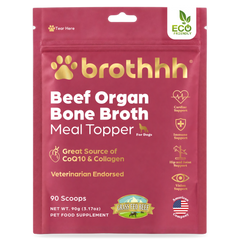
It’s clear that both homemade and store-bought broths have merits. But what if you could get the best of both worlds? That’s exactly the idea behind Brothhh’s approach. We’ve developed a Beef Organ Bone Broth Complex that offers the rich nutrition of a homemade broth with the convenience and consistency of a store product. Think of it as a safe, shelf-stable middle ground.
What makes brothhh’s bone broth blend different? First, it’s not just bone broth – it’s fortified with five key beef organs (liver, heart, spleen, kidney, and pancreas) to provide a nose-to-tail spectrum of nutrients. These organs are nutritional powerhouses, delivering vitamins, minerals, and protein that complement bone broth’s benefits. We start with 100% grass-fed, human-grade ingredients, slow-simmered and then gently dehydrated into a powder. That means all the goodness of real broth and organ meat is captured in a form that’s easy to use and won’t spoil on your shelf.
Because it’s a powder, our blend is naturally shelf-stable and travel-friendly – no refrigeration needed, and no 7-day ticking clock after opening. Yet, unlike some ultra-processed supplements, it contains only real whole foods. In fact, brothhh’s topper is made from just six pure ingredients (the five organs plus beef bone broth protein). There are no fillers, no salt, no artificial anything. Every batch is traceable and tested, so you can trust that what you’re giving your dog is safe. We’re transparently direct about what’s inside: simply nutrient-dense organs and bone broth, nothing more.
Using it is as easy as any store product: just scoop and sprinkle it over your dog’s regular food. It instantly coats kibble or fresh food with a delicious, meaty flavor (dogs absolutely love it) and infuses the meal with joint-supporting collagen, amino acids, and a host of natural vitamins and minerals from the organs. It’s like turning an ordinary dinner into a healing feast. And because it’s concentrated, you get the equivalent benefits of bone broth without having to pour large volumes of liquid – perfect for dogs who might not lap up a bowl of broth but will happily chow down a broth-soaked meal.
At Brothhh, we pride ourselves on being confident experts in ancestral nutrition for dogs. We’re passionately devoted to canine wellness, which is why every decision – from sourcing grass-fed beef organs to lab-testing our batches – is done with your dog’s health in mind. (We love our dogs more than most humans, so we hold our product to human-grade standards!) You can read more about our philosophy on our About Us page, but the bottom line is we don’t believe in compromising. Our organ and bone broth blend was perfected over two years to ensure it delivers consistent, noticeable benefits. It’s shelf-stable and easy, like a store product, yet as clean and potent as a homemade recipe you’d simmer up with love.
The Takeaway: Both homemade and store-bought bone broths can be wonderful for your dog when done right. Homemade offers control and potency, while store-bought provides ease and reliability. Evaluate your own schedule, your dog’s needs, and what matters most to you (ultimate nutrition vs. ultimate convenience, or maybe a balance of both). Whichever route you choose, bone broth is a fantastic addition to a dog’s diet for joint support, gut health, and overall vitality. And if you’re looking for a smart middle ground – the convenience of store-bought with the purity of a DIY brew – Brothhh’s got you covered with our unique bone broth and organ blend. Here’s to happy, healthy, joint-happy dogs enjoying their broth, whether it’s lovingly homemade or expertly crafted in a lab-tested kitchen.



Leave a comment
This site is protected by hCaptcha and the hCaptcha Privacy Policy and Terms of Service apply.